
The Mighty Bifidobacteria:
Dr. Sabine Hazan’s Groundbreaking Insights on Gut Health and Immunity

As a functional medicine nurse practitioner, I find myself always digging into the root causes of why one feels tired, inflamed or vulnerable to illness. One name that keeps coming up in my research is Dr. Sabine Hazan, a gastroenterologist, researcher, and founder of ProgenaBiome, a lab dedicated to decoding the gut microbiome. Her work shines a bright light on one unsung hero in our intestines: Bifidobacterium (often called “Bifido” or “Biff” for short).
If you’ve ever taken a probiotic or eaten yogurt, you’ve probably heard of beneficial bacteria. But Dr. Hazan’s studies suggest Bifidobacteria may be one of the most important players for overall health—especially immunity. Let’s break it down in simple terms, without the heavy science jargon.
What Are Bifidobacteria and Why Do They Matter?
Imagine your gut as a lush garden. A diverse mix of good “plants” (bacteria) keeps everything thriving—digesting food, making vitamins, calming inflammation, and training your immune system. Bifidobacteria are like the sturdy oak trees in that garden. They’re especially abundant in healthy babies, which may explain why infants often handle early infections better.
As we age or face modern stressors (processed foods, antibiotics, stress), these beneficial bacteria can dwindle. Dr. Hazan’s research shows this loss isn’t just a minor issue—it’s linked to weaker immunity and greater vulnerability to health challenges.
The COVID-19 Connection: “Lost Microbes”
One of Dr. Hazan’s most talked-about studies, “Lost Microbes of COVID-19,” compared the gut bacteria of people with severe symptoms to those who stayed healthy despite exposure. Unfortunately, this study was heavily censored.
Key finding: People with severe illness often had very low or zero Bifidobacteria, along with reduced overall bacterial diversity. Those who remained well despite high exposure tended to have higher levels.
Dr. Hazan hypothesizes that a strong population of Bifidobacteria helps the body mount a better defense. Without them, the immune system may struggle more. She describes this as a potential “susceptibility marker”—a clue that your gut garden might need tending before trouble arrives.
This work highlights a powerful idea: To fight a virus (or any invader), you may need strong bacteria first.
Vitamin C as a Bifido Booster
Dr. Hazan’s team also explored practical ways to support these good bugs.
In a study published in Future Microbiology, they found that high-dose vitamin C (oral or IV) significantly increased Bifidobacteria levels in participants.
The results were striking: Vitamin C supplementation helped shift the gut toward a healthier balance.
This may explain some of vitamin C’s well-known benefits for fighting infections and supporting recovery. It’s a simple, accessible tool that could help “refloralize” a depleted microbiome.
What I’m Seeing in My Own Practice
Dr. Hazan’s findings resonate deeply with what I observe every day. For the last decade, I’ve been running advanced stool testing on clients dealing with fatigue, digestive issues, autoimmune conditions, brain fog, and more. The one consistent theme that stands out above everything else? Low to no detectable total Bifidobacteria in the vast majority of my clients.
This pattern holds across different ages, backgrounds, and health complaints. It’s as if this foundational “oak tree” has been quietly disappearing from modern guts—and its absence seems to leave people more vulnerable. Dr. Hazan’s research helps explain why this loss matters so much and gives us a clear target for healing.
Broader Implications for Everyday Health
Dr. Hazan’s observations go far beyond one virus. She has noted low Bifidobacteria in conditions like autism, Lyme disease, inflammatory bowel issues, and even some cancers. Her work suggests that restoring these bacteria could be a key piece of the healing puzzle.
She emphasizes that once Bifidobacteria are truly gone, it can be hard to bring them back—making prevention and early support crucial.
Probiotics, diverse plant-rich foods, and avoiding unnecessary antibiotics are part of the strategy, but individualized testing (like microbiome sequencing) can offer deeper insights.
What Can You Do to Support Your Bifidobacteria?
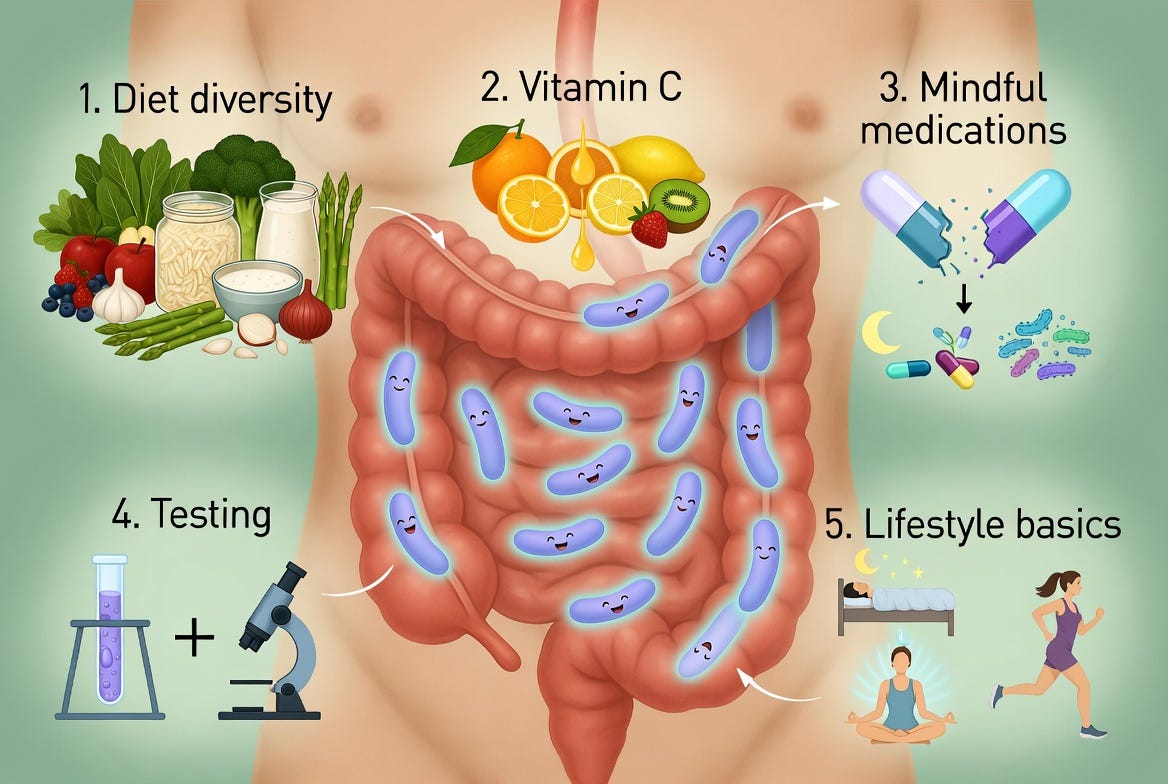
Here are gentle, practical steps inspired by Dr. Hazan’s findings and my clinical experience:
Eat for diversity — Load up on fiber-rich vegetables, fruits, fermented foods (like sauerkraut or kefir), and prebiotic foods (garlic, onions, asparagus) that feed good bacteria.
Consider vitamin C — Work with a practitioner to explore appropriate dosing, especially during illness or stress.
Be mindful of medications — Use antibiotics only when truly needed, and support your gut during and after with targeted restoration.
Test if possible — Advanced stool testing can reveal your personal microbiome landscape and track progress.
Lifestyle basics — Sleep, stress management, and movement all influence your inner garden.
Dr. Hazan’s message is hopeful: By nurturing our microbes, especially Bifidobacteria, we can build resilience from the inside out.
Final Thoughts
Dr. Sabine Hazan’s pioneering work at ProgenaBiome reminds us that health starts in the gut. Her research on Bifidobacteria offers a fresh lens on immunity, aging, and recovery—one that aligns beautifully with functional medicine’s root-cause approach. My own decade of client testing only reinforces how widespread this issue has become.
If you’re dealing with ongoing fatigue, digestive issues, or just want to feel more vibrant, pay attention to your gut garden.
Start small, stay consistent, and consider consulting a practitioner who understands the microbiome.
With gratitude for trailblazers like Dr. Hazan, Your Root Cause Medicine NP.
Key References
Hazan S, Stollman N, Bozkurt HS, et al. Lost microbes of COVID-19: Bifidobacterium, Faecalibacterium depletion and decreased microbiome diversity associated with SARS-CoV-2 infection severity. BMJ Open Gastroenterology. 2022;9(1):e000871. doi:10.1136/bmjgast-2022-000871.
(The foundational “Lost Microbes” study discussed in the article.)Hazan S, Dave S, Papoutsis AJ, et al. Vitamin C improves gut Bifidobacteria in humans. Future Microbiology. 2025;20(6). doi:10.2217/fmb-2022-0209.
(The vitamin C supplementation study showing increased Bifidobacterium levels.)Hazan S, et al. Bifidobacterium Against COVID-19: A Mother and Her Newborn’s Gut Microbiome. Cureus. 2024;16(5):e60038. doi:10.7759/cureus.60038.
(Case report highlighting Bifidobacteria in maternal and neonatal health.)Hazan S. Loss of Bifidobacterium in adults with a history of invasive cancer. Abstract presented at: Digestive Disease Week (DDW); May 2023.
Additional relevant work by Dr. Hazan includes observations on Bifidobacteria depletion in conditions such as autism spectrum disorder, Lyme disease, and anxiety, as well as microbiome sequencing research through ProgenaBiome.
For further reading: Visit Dr. Hazan’s lab website at progenabiome.com/publications or search PubMed for “Hazan S Bifidobacterium.”